NeoGraft Hair Transplant · The Woodlands, TX

Your own hair, moved to where you need it

NeoGraft is an automated FUE hair transplant: healthy follicles are taken one at a time from the back of your scalp and placed where you're thinning. No strip, no stitches, no linear scar — and a timeline we'll be honest about, because the real result takes a year.

  • Physician-led program — your plan is built by Dr. Nangrani, MD
  • Local anesthesia, home the same day
  • New growth from about month 3–4; full result at 12–18 months
Man checking his hairline for thinning in the mirror

Book your free consultation

We look at your pattern of loss and your donor hair, estimate how many grafts you need, and tell you honestly whether a transplant is the right step yet.

Please tell us your name
Please enter a valid phone number
Please enter a valid email address
Please choose one

Your details go to our office only. We never sell or share them.

Physician-ledDr. Chaitali Nangrani, MD — board-certified
4.6 on Google350+ reviews · The Woodlands since 2011
NeoGraft automated FUEFollicles extracted one by one — no strip
Quoted by graft countItemised at your free consultation

What people come in for

Where you're losing hair changes how many grafts you need — and whether a transplant is the right answer yet.

NeoGraft example result at the hairline, before and at four months
Hairline & temples

“My hairline is creeping back and I'm done hiding it.”

The most common reason people book. Grafts are placed at angles that follow your natural growth direction, so the new hairline looks soft rather than drawn on. A good plan also allows for the fact that you'll keep ageing — a hairline that suits you at 30 needs to still suit you at 50.

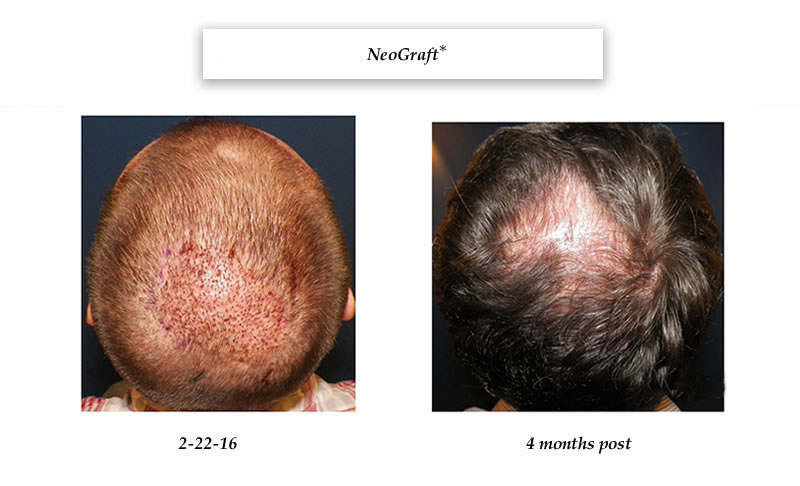
NeoGraft example result at the crown, before and at four months
Crown

“I only see it in photos taken from above.”

Crown thinning can be treated, but it's a larger area and hair there grows in a whorl, so it takes more grafts to show density. If your loss is still actively progressing, protecting the hair you have may come first — we'll tell you if that is the better use of your money right now.

Woman combing long hair and checking for thinning
Women

“My part is getting wider.”

Women can have NeoGraft, but female hair loss is more often diffuse thinning than a receding pattern, and the donor area can be thinning too. That makes careful assessment more important than for men. For some women a transplant is the right answer; for others, medical treatment comes first.

Man receiving a scalp treatment
Tried everything else

“Shampoos, supplements, gummies. Nothing.”

Cosmetic products don't restore follicles that have stopped producing hair. A transplant relocates follicles from the back of the scalp that are genetically resistant to the hormone behind pattern hair loss — which is why they tend to keep growing after they're moved.

Five things everyone asks first

In the order people actually search them.

What does NeoGraft cost?

Hair transplants are priced by the number of grafts, and that depends on the size of the area, how much density you want and how much donor hair you have. A quote over the phone without seeing your scalp would just be a guess. You'll get a graft estimate and an itemised price at your free consultation, and we offer Cherry and CareCredit.

Will it look natural?

It should — the hair is your own and grows the way your hair grows. Natural-looking results come from the plan more than the machine: hairline design, graft angle and spreading grafts realistically across the area rather than packing one spot. It also takes time; for the first few months it can look like nothing has happened.

Is it really scar-free?

No, and be wary of anyone who says so. NeoGraft avoids the long linear scar of the older strip method, but each extracted follicle leaves a tiny round mark. They heal small and are generally hard to see once hair grows back over them — but if you plan to shave your head very close, talk to us about that first.

How much downtime?

Most people are back at a desk job within a few days. Expect some swelling for the first few days and small scabs on the treated area for about a week to ten days. Strenuous exercise waits a couple of weeks. If you need nobody to notice, plan around the first ten days.

Is it permanent?

The transplanted follicles are long-lasting because they come from hair that's resistant to pattern loss. But your other hair isn't, and it can keep thinning around the transplant. That's why the plan has to think ahead, and why some people are advised to protect their existing hair medically as well.

What happens on procedure day

It's a long day but not a hard one. Most people watch something, nap, or take a break for lunch.

Plan and hairline

Your graft plan and hairline are reviewed and marked before anything starts.

Donor area prepared

The donor area at the back and sides is trimmed short and numbed with local anesthetic. The injections sting; after that you shouldn't feel the extraction.

Extraction

The NeoGraft device removes individual follicular units using gentle suction, one at a time, without cutting out a strip of scalp.

Implantation

Grafts are placed into tiny sites in the thinning area at the angle and direction your hair naturally grows.

Home the same day

You leave with aftercare instructions and go home the same day. Someone should drive you.

How long the day takes depends on how many grafts you're having. It is usually most of a day — we'll give you a realistic estimate when we plan it.

Your hair, month by month

This is the part most clinics gloss over. Knowing it in advance is the difference between a calm month two and a panicked one.

Days 1–10

Small scabs on the grafts, some swelling of the forehead for a few days, and a sunburn-like pinkness. Scabs come away at around a week to ten days. Gentle washing as instructed.

Weeks 2–8 — the shed

Most transplanted hairs fall out. This is expected: the follicle stays in place and rests before regrowing. Some nearby existing hair can shed too, and usually returns.

Months 3–4

New hairs start coming through. They're fine and sparse at first.

Around month 6

Noticeable change. Roughly half the eventual growth has usually come through by now, and it's starting to thicken.

Months 12–18

The full result. Hairs have thickened and matured; crown results often take the longest.

What NeoGraft results look like

Early results, months after treatment — still short of the full result at 12–18 months.

NeoGraft example result, side view, before and at four months
Hairline, side view · before / 1 month / 4 months
NeoGraft example result, crown, before and at four months
Crown · before / 4 months
NeoGraft example result, front view, before, at three weeks and at nine months
Front · before / 3 weeks / 9 months

NeoGraft® example images. Individual results vary, and depend on your donor hair, the number of grafts and how your hair loss progresses. Ask to see more results at your consultation.

NeoGraft compared with the alternatives

A transplant isn't the only option, and it isn't always the first one.

NeoGraft (automated FUE)Manual FUEFUT / strip methodMedication only
How hair is takenIndividual follicles, device-assisted suctionIndividual follicles, hand-held punchA strip of scalp cut out and dissectedNone
Donor scarTiny round marksTiny round marksLong linear scarNone
StitchesNoNoRequiredNo
AnesthesiaLocalLocalLocal, sometimes with sedationNone
Typical downtimeA few days; scabs ~7–10 daysA few daysLonger — 1–2 weeks+None
Adds new hair to bald areas?YesYesYesNo — slows loss, may regrow some
OngoingOne procedure; may want another laterSameSameContinuous, for as long as you want the effect

Swipe the table sideways to see every column →

Many people do best with a combination: a transplant for areas that have already lost hair, and medical treatment to protect the hair that's still there. Whether medication is right for you is a medical decision we'll talk through at your consultation.

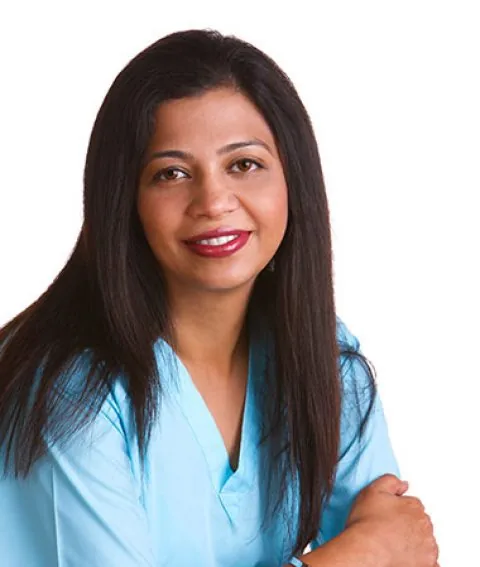
Dr. Chaitali Nangrani, MD, board-certified physician at Vedas Medical Spa The team at Vedas Medical Spa in The Woodlands

Dr. Chaitali Nangrani, MD

Board-certified physician · 15+ years in aesthetic & anti-aging medicine

Dr. Nangrani leads the hair restoration program at Vedas and builds your plan: she assesses your pattern of loss and your donor hair, decides how many grafts make sense, and tells you plainly if a transplant isn't the right step yet.

She has practised in The Woodlands since 2011 and is a Diplomate of the American Board of Family Medicine and of the American Academy of Anti-Aging Medicine, with an advanced fellowship in aesthetic medicine.

  • Diplomate, American Board of Family Medicine
  • Diplomate, American Academy of Anti-Aging Medicine
  • Advanced Fellowship in Aesthetic & Anti-Aging Medicine
  • Leads hair restoration at Vedas — in The Woodlands since 2011
Book with Dr. Nangrani

What drives the cost

Hair transplants are priced by the graft, so the honest answer to “how much?” starts with “how many?”. These are the things that decide it.

Size of the area A hairline, the crown or both. Larger areas need more grafts.
Density you want Filling in thinning hair takes fewer grafts than rebuilding a fully bald area.
Your donor hair How much healthy hair you have at the back and sides sets a ceiling on what's possible.
Cherry & CareCredit Pay over time. Cherry takes a couple of minutes and checking doesn't affect your credit score.

You'll get a graft estimate and an itemised number in writing at your free consultation, before anything is booked.

NeoGraft is probably right for you if…

  • You have pattern hair loss at the hairline, temples or crown
  • You have reasonably dense hair at the back and sides of your head
  • Your hair loss has settled into a recognisable pattern
  • You can wait a year to judge the full result
  • You're in good general health

Where we'll say “not yet”, or suggest something else: if you're young and losing hair fast, transplanting now can leave you with an island of hair later — stabilising it often comes first. Patchy loss from alopecia areata, scarring conditions, or shedding after illness, stress or childbirth needs diagnosing and treating, not transplanting. And if your donor area is thin, there may not be enough to move.

Find out at a free consultation

Questions we get asked

What's the difference between NeoGraft and FUE?

NeoGraft is FUE — follicular unit extraction. The difference is that the NeoGraft device uses controlled suction to help extract and place grafts, rather than everything being done with a hand-held punch and forceps. The core idea is the same: individual follicles, no strip of scalp removed.

Does it hurt?

The local anesthetic injections at the start sting. After that, most people feel pressure rather than pain. Afterwards the scalp is sore and tight for a few days, and swelling can drift down to the forehead around days two to four.

How long does the procedure take?

It depends on the number of grafts. It's usually most of a day, with breaks. We'll give you a realistic estimate once your plan is set.

Why did my new hair fall out?

Almost everyone sheds most of the transplanted hairs in the first two months. The follicle stays in the scalp and rests before growing a new hair from around month three or four. It's the single most common reason people panic — and it's normal.

When can I go back to work?

If you work at a desk, often within a few days. The scabs are the visible part and usually clear in about a week to ten days. A loose hat is generally fine once you're told it is; anything tight should wait.

When can I exercise?

Light walking straight away. Strenuous exercise, heavy lifting and anything that makes you sweat heavily usually waits a couple of weeks. Swimming waits longer. You'll get exact instructions for your procedure.

Can women have NeoGraft?

Yes, when the pattern suits a transplant and there's enough donor hair. Women more often have diffuse thinning, which can affect the donor area too, so the assessment matters more. Sometimes the right answer is medical treatment first.

Will I need more than one procedure?

Many people need only one. Some come back years later for more density, or because their other hair has continued to thin. A good plan allows for that from the start.

Who performs the procedure?

Dr. Nangrani leads our hair restoration program and does your consultation and plan. At your consultation we'll tell you exactly who is involved on your procedure day, and you're welcome to ask about their experience.

What are the risks?

Bleeding, infection, swelling, numbness in the donor or recipient area, folliculitis (small pimples as hairs come through), temporary shedding of existing hair, and some grafts not growing. The donor area leaves tiny scars. Serious complications are uncommon, and we'll go through them with you before you book.

Book your free NeoGraft consultation

We assess your hair loss and donor hair, estimate your graft count, explain the growth timeline honestly, and give you an itemised price in writing. No obligation.

HoursMon–Fri 9:00am–6:00pm · Sat 9:00am–1:00pm
Financing Cherry · CareCredit

Request your consultation

We'll call you back to book a time. No obligation.

Please tell us your name
Please enter a valid phone number
Please enter a valid email address
Please choose one

Your details go to our office only. We never sell or share them.

(281) 298-5476