Medical weight loss in The Woodlands, supervised by a doctor you actually meet.
GLP-1 medication such as semaglutide can quiet constant hunger and make
eating less feel possible. It works best with a doctor watching your dose, your side effects and
your progress in person — not an app. That's the program here, on Research Forest Drive.
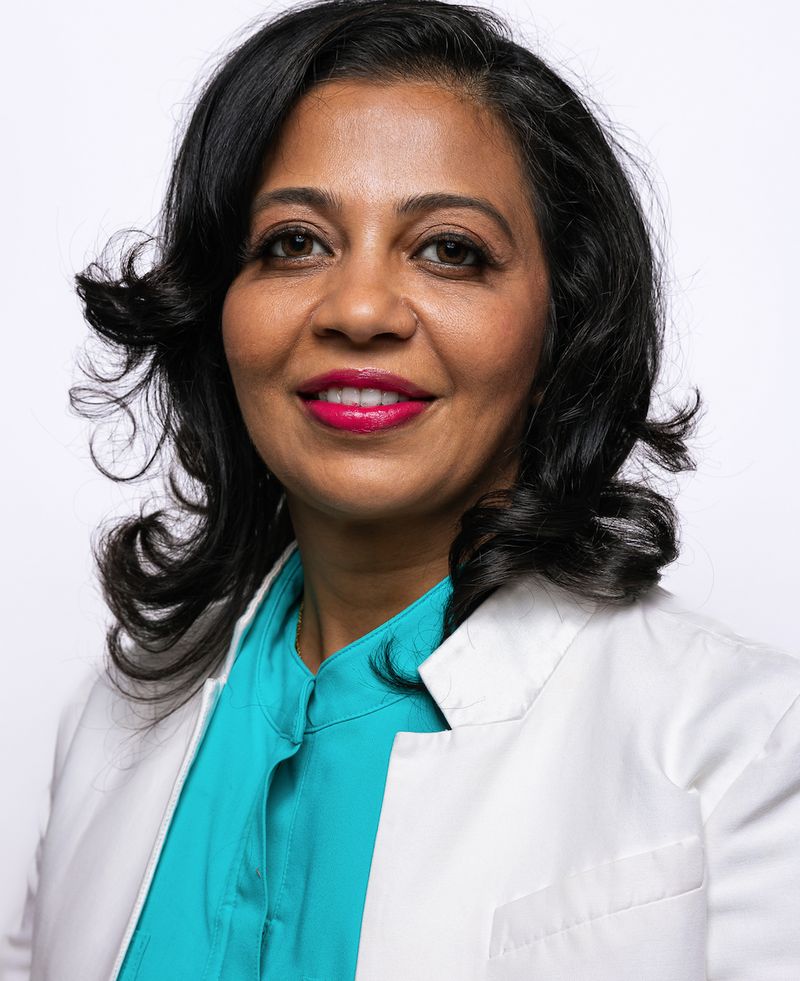
Prescribed and supervised by Dr. Nangrani, MD — in person, in The Woodlands
Once-weekly injection, started low and adjusted at each check-in
Food and habit guidance, so the progress has something to stand on
Talk through your goals, your health history and whether GLP-1 medication
is right for you. No obligation, and no prescription without a proper medical evaluation.
4.6 on Google350+ reviews · The Woodlands since 2011
In-person check-insDose, side effects and progress reviewed face to face
Cherry & CareCreditPay over time — ask at your consultation
Treatments that have been featured on
Who we usually help
Different starting points, same principle: a plan built around your health, not a one-size prescription.
Constant hunger
“I do everything right and I'm still hungry all the time.”
That isn't a willpower problem. GLP-1 medications act on the hormones that control appetite and fullness, and slow how quickly the stomach empties. Many people describe it as the background noise about food finally going quiet — which is what makes smaller portions sustainable.
Midlife and plateaus
“Over 40, and what used to work stopped working.”
Hormonal change, less sleep, more stress and a slower routine all push weight up. Dr. Nangrani looks at the whole picture at your consultation — not just the number on the scale — before deciding whether medication should be part of it.
Already on a GLP-1
“I started through an app and want a real doctor.”
You're welcome to bring your current medication, dose and history. We'll review it in person, check for side effects you may have been told to just put up with, and decide together whether to continue, adjust or change course.
Health-driven goals
“My doctor said my weight is affecting my health.”
Blood pressure, blood sugar, joints, sleep. If weight is part of a bigger health conversation, that's exactly where medically supervised weight loss belongs. Bring your recent results and the medicines you take to your consultation.
“I’ve been using the semiglutide offered at Vedas and I’ve lost 20 lbs!!! … It’s amazing.”
Candice B. · Google review
★★★★★Rated 5 out of 5 stars
“I have been to Vedas Medical Spa for weight loss and my journey has been amazing. Everyone is very professional, humble and helpful.”
Devneet B. · Google review
★★★★★Rated 5 out of 5 stars
“Dr. Nangrani is highly knowledgeable, very professional and personable … I am not only healthy, less achy and sleep better but energetic, lost weight and feel great!!”
Excerpts from public Google reviews of Vedas Medical Spa. Individual experiences and results vary.
Five things everyone asks first
Straight answers, before you book anything.
How much weight will I lose?
Nobody honest can promise a number. In the STEP 1 clinical trial, adults taking semaglutide 2.4 mg once a week alongside diet and activity changes lost about 15% of their body weight on average over 68 weeks, compared with about 2% on placebo. Some people lost more, some less. Your own result depends on your dose, how well you tolerate it, and the habits that go with it.
What are the side effects?
The common ones are stomach-related — nausea, diarrhea, vomiting, constipation, reflux — and they're usually worst when the dose goes up. That's why we start low and increase gradually. Less common but serious risks include pancreatitis and gallbladder problems. Semaglutide also carries an FDA boxed warning about thyroid tumors, so it isn't for anyone with a personal or family history of medullary thyroid cancer or MEN 2.
Do I have to inject myself?
It's a small once-weekly injection under the skin of the stomach, thigh or upper arm. You can have it given in our office, or we'll show you how to do it at home. Most people are surprised how small the needle is.
What happens when I stop?
Research shows that when the medication stops, much of the lost weight often returns over the following year unless the habits have changed. That's why the program includes food and lifestyle guidance from day one, and why we plan the end of treatment with you rather than just stopping.
What does it cost — and does insurance pay?
It depends on the medication and dose, how often you're seen, and how long the program runs. Many insurance plans don't cover GLP-1 medication for weight loss. You'll get a clear monthly cost at your free consultation before you commit, and we offer Cherry and CareCredit.
How the program works
A medical program with a prescription in it — not a prescription with a program bolted on.
Free consultation
Your goals, weight history, current medicines and medical conditions. Dr. Nangrani tells you honestly whether GLP-1 medication makes sense for you — or whether something else should come first.
Medical evaluation
Before anything is prescribed, we confirm it's appropriate for you and screen for the conditions that rule it out, such as a history of medullary thyroid cancer or pancreatitis, pregnancy or plans to conceive.
Start low
You begin on the lowest dose of a once-weekly injection — in our office or at home. Starting low gives your stomach time to adjust and keeps side effects down.
Check in and adjust
We see you regularly to review progress and side effects and decide whether to step the dose up, hold it, or change the plan. You're never left guessing between visits.
Build the habits that last
Practical guidance on protein, portions, movement and strength, so you protect muscle and have a plan for keeping the weight off when the medication eventually stops.
Who should not take it — and what we check
GLP-1 medication isn't right for everyone. These are the conversations we have before a first dose, not after.
Thyroid cancer history.
Not for anyone with a personal or family history of medullary thyroid carcinoma or Multiple Endocrine Neoplasia type 2 (FDA boxed warning).
Pancreatitis or gallbladder disease.
A history of either changes the decision and needs careful discussion.
Pregnancy.
Not used during pregnancy or while trying to conceive; we'll talk about timing.
Diabetes medicines.
Combined with insulin or sulfonylureas, blood sugar can drop too low, so those doses may need adjusting with your doctor.
Dehydration.
Vomiting or diarrhea can strain the kidneys; we'll tell you what to watch for and when to call.
Your full medication list.
Bring it, including supplements. GLP-1s slow digestion and can change how some oral medicines are absorbed.
Local doctor-supervised care vs an app vs going it alone
There's more than one way to get GLP-1 medication. Here's what tends to differ.
What differs
Doctor-supervised at Vedas
Typical online GLP-1 service
Diet and exercise alone
Who prescribes
Dr. Nangrani, MD — you meet her
A clinician you may only see on video
No prescription
First assessment
In person, in The Woodlands
Questionnaire and/or video visit
—
Dose adjustments
At in-person check-ins
Usually by message or video
—
Side-effect support
Call the office or come in
Message or video
—
Food and habit guidance
Part of the program
Varies by service
Self-directed
Average loss in trials
About 15% with semaglutide 2.4 mg + lifestyle (STEP 1)
Same medication, same trial data
About 2% in the same trial's placebo group
Prescription required
Yes
Yes
No
Swipe the table sideways to see every column →
Trial figures are averages over 68 weeks from the STEP 1 trial (Wilding et al., New England Journal of Medicine, 2021), where both groups also had lifestyle support. They are not a prediction of your result. Online services vary widely — ask any provider who prescribes, how often you'll be reviewed, and exactly which medication and pharmacy you'll receive.
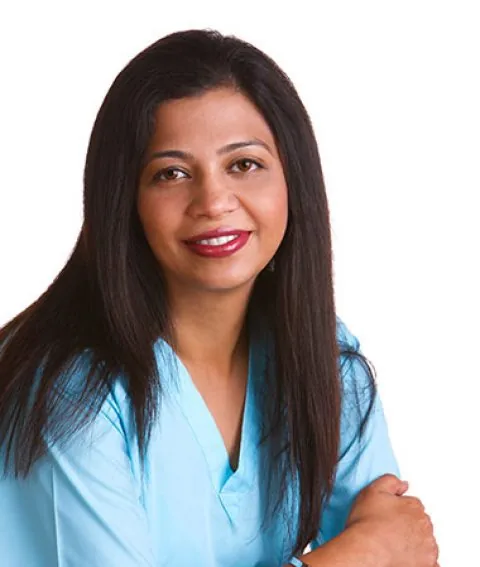
Dr. Chaitali Nangrani, MD
Board-certified physician · 15+ years in aesthetic & anti-aging medicine
Dr. Nangrani has practised medicine in The Woodlands since 2011 and is the medical director at Vedas. She is a Diplomate of the American Board of Family Medicine and of the American Academy of Anti-Aging Medicine, with an advanced fellowship in aesthetic and anti-aging medicine.
Her approach to weight loss is the same as her approach to everything else: a proper medical evaluation first, medication only where it's appropriate, and an honest conversation about what to expect — including the side effects and what happens after.
Diplomate, American Board of Family Medicine
Diplomate, American Academy of Anti-Aging Medicine
Advanced Fellowship in Aesthetic & Anti-Aging Medicine
Licensed by the Texas Medical Board
Member, Texas Medical Association
Prescribes and supervises the weight-loss program personally
GLP-1 is a hormone your gut releases after you eat. It tells the brain you're full and slows how quickly the stomach empties. GLP-1 medications such as semaglutide mimic it, so you feel full sooner and stay full longer. It's prescription-only and given as a once-weekly injection.
Is it the same as Ozempic or Wegovy?
Ozempic and Wegovy are brand names for semaglutide made by Novo Nordisk; Wegovy is the version FDA-approved for chronic weight management. You may also have heard of compounded semaglutide, which is made by a pharmacy and is not FDA-approved. At your consultation we'll tell you exactly which medication you'd be prescribed and where it comes from — and you should expect that answer from any provider.
How fast will I see results?
The dose starts low and is increased gradually over the first few months, so early weight loss is usually modest. Most people notice their appetite change first. In trials, weight loss continued for over a year at the full dose.
Will I lose muscle?
Any significant weight loss includes some lean mass, not just fat. Eating enough protein and doing some strength training helps protect muscle, which is why they're built into the program guidance.
How long will I need to take it?
It's designed as a long-term treatment, and many people stay on it for a year or more. When you stop, appetite tends to return and weight can come back. We plan the end of treatment with you — tapering, a maintenance plan, and the habits that hold the result.
Can I drink alcohol on it?
Alcohol can make nausea worse and adds calories, and with some diabetes medicines it raises the risk of low blood sugar. Ask Dr. Nangrani what's sensible for you.
I'm already taking a GLP-1 from another provider. Can you take over?
Often, yes. Bring your current medication, dose, start date and any side effects. We'll review it in person and decide together whether to continue, adjust or change course.
What about loose skin or stubborn areas afterwards?
Weight loss can leave areas of loose skin or pockets of fat that don't shift. Once your weight is stable, Vedas also offers body contouring, skin tightening and SmartLipo — we'll talk about that when the time is right, not before.
Do you treat men?
Yes. The medical evaluation, the medication and the program are the same, with targets set to you.
Book your free weight-loss consultation
Meet Dr. Nangrani, talk through your history and goals, and find out whether
GLP-1 medication is right for you — with a clear monthly cost before you decide. No obligation.
This page is for information only and does not constitute medical advice. Individual results vary. GLP-1 medications are prescription-only and are prescribed only after an in-person medical evaluation, together with changes to diet and physical activity. Semaglutide carries a boxed warning for thyroid C-cell tumors and must not be used by anyone with a personal or family history of medullary thyroid carcinoma or Multiple Endocrine Neoplasia syndrome type 2. Other risks include pancreatitis, gallbladder problems, low blood sugar when combined with some diabetes medicines, kidney problems from dehydration, and gastrointestinal side effects such as nausea, vomiting, diarrhea and constipation. Compounded medications are not FDA-approved. Trial figures quoted are averages from published research, not a prediction of your result. Prescribing physician: Dr. Chaitali Nangrani, MD.